


Lisa Law: AI Legal Help 24/7
Lext Inc
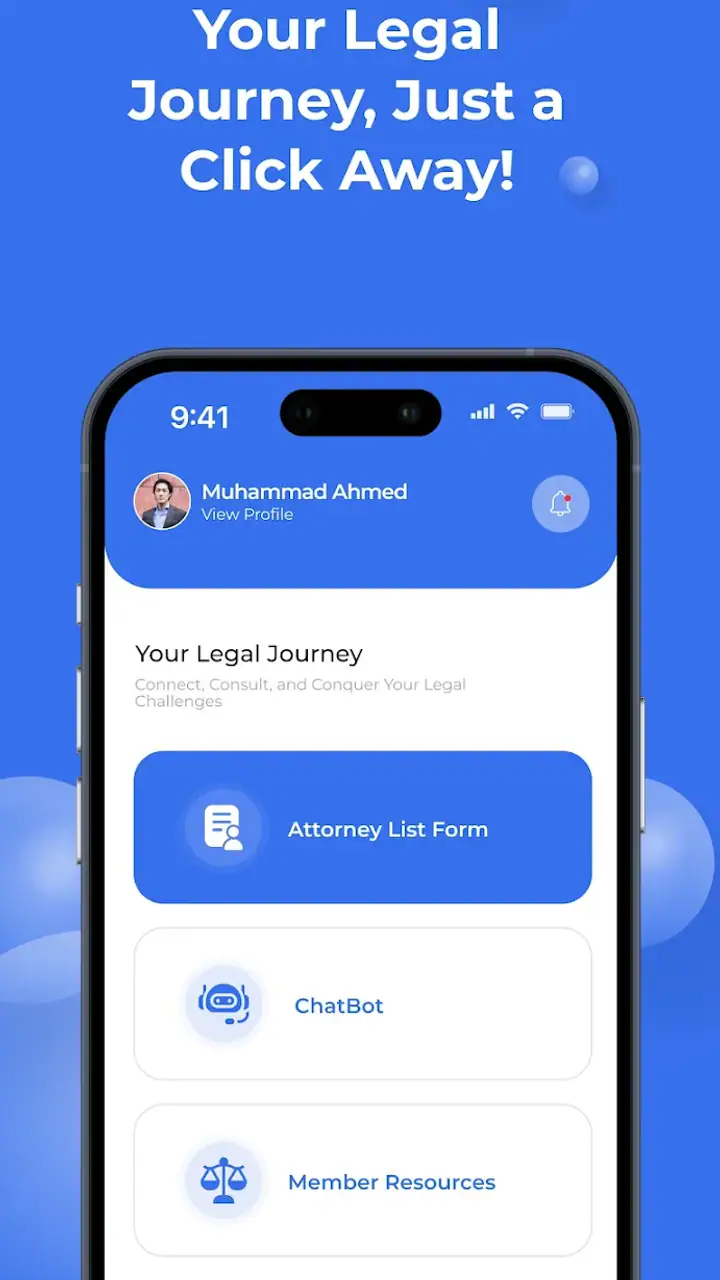
I approached Lisa Law: AI Legal Help 24/7 as a practical business app rather than as a replacement for a solicitor. Its purpose is to make early legal guidance easier to reach, with an AI assistant, local-oriented help, forms, and routes toward attorney referrals. That combination can be useful when a legal question appears suddenly and you need help organizing the situation before deciding what to do next.
My overall impression is mixed. The idea is approachable, especially for someone who finds legal language intimidating, but the modest 2.3 average from roughly 139 ratings suggests that the experience has not worked equally well for everyone. I would treat it as a first-stop tool for orientation, not as the final authority on an important dispute, contract, deadline, or court matter.
How Lisa Law feels to read and navigate
A simple starting point for people who dislike legal jargon
The strongest accessibility benefit is the conversational format. Instead of beginning with a long legal library, I can describe a problem in ordinary language and use the response to identify the relevant topic. That matters for people who are unfamiliar with legal vocabulary, are under stress, or are trying to help somebody else understand a business or personal issue.
The app belongs in the Business category, and that is a sensible fit. A small business owner might use it to think through a customer disagreement, a basic document need, or the next questions to ask an attorney. The developer is Lext Inc, and the app is free to install, which lowers the barrier to trying the basic experience. Optional purchases are listed at about $19.90 per item, so I would check the cost carefully before committing to anything beyond the free entry point.
Readability is not only about font size. Legal information becomes easier to follow when it is broken into a clear sequence: describe the facts, identify the jurisdiction, separate urgent deadlines from general background, and decide whether professional help is needed. Lisa Law is most useful when I use it in that order rather than asking a vague question and accepting the first answer as complete.
Related News

Why WhatsApp Messenger Still Makes Everyday Communication Feel Easy

Jurassic World: The Game Is the Better Dino Tycoon for Strategic Players

Threads in Real Life: Who Should Join, Lurk, or Leave

How SHEIN Turned Shopping Into an Endless Content Feed

How to Make Fortnite Feel Smarter on Mobile

Should You Switch to Microsoft Outlook on Mobile?
Why the wording of a question matters
One practical tip is to write the situation in short, factual pieces. I would include who is involved, what happened, where it happened, and what result I want. For example, “A customer has not paid an invoice, the work was delivered, and I have written messages confirming the price” is more useful than “How do I sue someone?” This workflow reduces ambiguity and makes the resulting guidance easier to review.
I also recommend asking the same issue in a second, more specific way. First ask for a plain-language explanation, then ask what facts could change the answer. That second pass is important because legal outcomes often depend on details that are easy to overlook. It also gives me a quick way to notice whether the guidance is genuinely responding to my situation or merely repeating broad legal language.
For readers with dyslexia, limited legal literacy, or English-language confidence concerns, conversational explanations may be less intimidating than official forms and government pages. However, I would still copy important wording into a separate note and read it slowly. A friendly answer can feel clearer than a formal document while still leaving out a condition that matters.
Gallery
Navigation in a stressful moment
Legal problems rarely arrive at a convenient time. Someone may be standing outside an office, dealing with a landlord, responding to a work issue, or trying to understand a document late in the day. In that context, the value of a mobile assistant is less about deep research and more about helping the user create a short action list.
I would use the app to produce three things: a plain-language summary of the issue, a list of documents or messages to gather, and questions to take to a qualified attorney. This is more dependable than asking it to make a final decision. It also helps users who have difficulty holding several steps in memory, because the conversation can act as a temporary structure for the problem.
The app is available for devices running Android 7.0 or later, and its current version is 3.4.5. That broad operating-system requirement may help people using older Android hardware, although the quality of the experience will still depend on the individual phone, display, keyboard, and system settings. Its Everyone age classification makes it approachable for a wide audience, but an age label should not be confused with advice that is suitable for every legal situation.
Motor, sensory, and situational access
Reducing typing without removing the need for careful input
Typing a legal story on a phone can be tiring for users with tremors, limited dexterity, repetitive-strain pain, or one-handed use. Lisa Law’s conversational purpose can help because I do not need to construct a perfectly formatted legal request. I can start with a short description and refine it gradually. That is a meaningful advantage over a long form that expects every field to be completed correctly before anything useful appears.
There is an important trade-off, though. Shorter typing does not automatically mean less effort. If the first description leaves out a date, location, agreement, or document, I may have to return and add context. I would prepare a short text note before opening the app, then paste or type the facts in separate parts. This avoids trying to remember everything while also navigating a legal conversation.
People who use voice input may find this style of interaction easier than typing, but I would review every transcribed sentence. Names, addresses, amounts, dates, and legal terms are especially vulnerable to recognition errors. A mistaken word in a casual chat is inconvenient; a mistaken word in a legal explanation can change the meaning of the situation. Voice input should therefore be treated as a drafting aid, not as a reason to skip proofreading.
Reading, hearing, and processing information
For users with low vision, the practical question is whether the device’s own display and text settings make the conversation comfortable. I would increase system text size if needed, use a larger display, and avoid reviewing a long response while rushed. The app may be easier to approach than a dense legal website, but that does not guarantee that every screen, form, or referral step will suit every visual need.
Users with hearing loss are not placed at a disadvantage by a text-centered legal interaction in the same way they might be by a phone-only service. Written guidance can be revisited and shared with a trusted person. That is particularly useful when a user needs extra processing time or wants to compare the answer with a document. At the same time, text does not solve every barrier: complicated wording, unclear organization, or an unexplained referral can still make the process difficult.
For people with attention-related disabilities, I would avoid asking several unrelated questions in one message. Keep one issue per conversation, save the key conclusion, and mark any deadline separately. This is one of the most useful ways to make the app manageable: use it as a sequence of small decisions instead of a single attempt to solve an entire legal problem.
When local context and referrals become important
The promise of local guidance is valuable because legal rules can change by location. A general explanation may help me name the problem, but local context determines whether a form, deadline, agency, or attorney is relevant. I would state the location early and repeat it if the conversation shifts to another issue. If the response sounds generic, that is a signal to pause and seek a local professional rather than assuming the answer applies.
The attorney-referral aspect is potentially useful for users who do not know where to begin. It can shorten the distance between “I have a problem” and “I have prepared questions for a lawyer.” Before sharing sensitive material, I would remove unnecessary personal identifiers from the initial description and keep copies of any documents I may later need to provide. The app can help organize a referral conversation, but I would still evaluate the attorney independently and ask about scope, communication, and cost before proceeding.
A realistic everyday scenario
Imagine a freelancer who receives a message saying that an invoice will not be paid because the client is unhappy with the finished work. The freelancer opens Lisa Law, explains the agreement, delivery date, payment terms, and written communications, then asks what facts should be preserved. The useful outcome is not an instant promise of recovery. It is a clearer record of the timeline, a checklist of documents, and a set of questions for professional advice.
This scenario also shows where the app should not be overtrusted. If the freelancer has a court notice, a rapidly approaching deadline, a dispute involving substantial money, or a contract with unusual terms, an AI explanation is not enough. In that case I would use the app only to prepare and then contact a qualified local attorney or appropriate official service promptly.
Remaining barriers and where another option is better
AI convenience versus legal certainty
The central limitation is the same feature that makes the app approachable: it uses an AI assistant. AI can summarize, organize, and suggest questions, but it can also produce an answer that sounds confident while missing a fact. Legal guidance is especially sensitive to jurisdiction, wording, deadlines, exceptions, and the difference between general information and representation.
I would not rely on Lisa Law alone for criminal accusations, immigration decisions, family safety matters, eviction deadlines, court filings, complex business transactions, or anything where a wrong step could cause lasting harm. A government website may be better for official forms and filing instructions. A licensed attorney is better for advice tailored to the complete facts. A legal-aid organization may be more appropriate when affordability or safety is the main concern.
The app’s free entry point makes experimentation easier, but the in-app price of about $19.90 per item means that users should understand what they are purchasing before confirming. People with limited budgets may prefer to use the free interaction for preparation and compare it with local legal-aid resources. The most responsible workflow is to treat any paid feature as an optional convenience, not as proof that the resulting guidance is professionally reviewed.
Forms can help, but they can also create false confidence
Forms are one of the more practical parts of the concept. A guided document can be less intimidating than an empty page, particularly for someone who has never written a formal request. I would use a form as a draft and then check every name, date, amount, attachment, and recipient before sending it.
The hidden risk is assuming that a completed form is automatically the correct form. A document can be neatly written and still be unsuitable for the location, procedure, or legal goal. My recommendation is to ask what the form is intended to accomplish, what supporting material it requires, and what happens after submission. If those answers are unclear, stop before sending anything.
Privacy, confidence, and support needs
Anyone describing a legal problem should think carefully about personal information. I would begin with the minimum facts needed to explain the issue, replacing full names and account details with neutral labels. I would also avoid uploading sensitive material until I understand why it is needed and how I will use the resulting guidance.
This matters even more for users in unsafe households, workplaces, or relationships. A person may need to use a shared phone, a public connection, or a device monitored by somebody else. In such circumstances, a mobile legal tool is not automatically private simply because it is convenient. A trusted local service, advocate, or attorney may offer a safer route, depending on the situation.
Another barrier is language and cognitive load. Plain conversation can be friendlier than legal websites, but the user may still need translation, a support person, or a professional who can explain the consequences. I would never ask a child or vulnerable adult to manage a serious legal matter through the app alone, even though the age classification is Everyone.
How it compares with usual alternatives
Compared with a search engine, Lisa Law can be more focused because I can describe the facts and turn the response into follow-up questions. Compared with a government website, it is likely to feel less formal and easier at the orientation stage, but the official source remains the better place to verify procedures, deadlines, and forms. Compared with an attorney, it is faster and easier to approach, but it lacks the professional judgment and responsibility of a person who reviews the whole case.
That makes the app a bridge rather than a destination. Its best role is preparing a user for the next step: clarifying the issue, gathering records, drafting questions, and deciding whether a referral is warranted. If I already know which official agency or attorney I need, going directly there is usually more efficient. If I do not know what kind of problem I have, the conversational starting point has more value.
My inclusive verdict
Lisa Law is most appealing to people who need a less intimidating way to begin a legal conversation. Its mobile format, plain-language starting point, forms, local orientation, and attorney-referral direction can support users who struggle with dense websites, unfamiliar terminology, or the first step of asking for help. I especially like the idea of using it to turn a stressful story into a timeline and a short list of questions.
Still, accessibility is not just ease of entry. A truly useful legal tool must also help users recognize uncertainty, protect sensitive information, and move toward appropriate human or official support. I would keep the app’s guidance as a draft, verify location-specific details, and avoid treating a polished response as a legal conclusion. That discipline is essential for users with limited time, limited money, or limited ability to recover from an error.
The app was released on March 14, 2025, and has passed ten thousand installs, so it is still a relatively small product compared with the familiar alternatives people may already use. The rating picture encourages caution rather than dismissal: the experience may suit some users while frustrating others. I would try it for low-risk orientation, not for a decision that cannot easily be undone.
My final recommendation is therefore conditional. Choose Lisa Law if you want help naming a legal issue, preparing documents, or organizing a conversation with an attorney, and if you are comfortable checking the result yourself. Skip it as your main solution when the matter is urgent, high-stakes, highly personal, or dependent on exact local procedure. Used with those boundaries, it can make the first step feel more manageable; used without them, its convenience may create more confidence than certainty.
FAQs for Lisa Law: AI Legal Help 24/7
What is Lisa Law: AI Legal Help 24/7, and what can it do?
Lisa Law: AI Legal Help 24/7 is an AI-powered legal information app designed to provide quick answers to general legal questions. Users can describe a situation in everyday language and receive explanations, possible next steps, and commonly relevant legal concepts. It may be useful for preparing questions, understanding unfamiliar terminology, or organizing information before speaking with a qualified professional. Its responses should be treated as general guidance, not personalized legal representation.
Can Lisa Law replace a lawyer or provide official legal advice?
No. Lisa Law should not be considered a replacement for a licensed attorney, solicitor, or other qualified legal professional. AI-generated responses can be incomplete, inaccurate, or unsuitable for the specific facts and jurisdiction involved. The app may help you understand an issue or prepare for a consultation, but important decisions should be verified with a professional. For urgent matters, court deadlines, criminal allegations, immigration issues, or potential financial liability, seek qualified legal help directly.
Is Lisa Law accurate for every country, state, or legal situation?
Legal rules vary significantly between countries, states, provinces, and even local courts, so the usefulness of Lisa Law depends on the jurisdiction and details you provide. The app’s information may not reflect the latest legislation, court decisions, or local procedures. Before relying on an answer, confirm that it applies to your location and circumstances. Always check official government sources or consult a local legal professional when accuracy is important.
Is my information private when I use Lisa Law?
Before entering sensitive details, review Lisa Law’s privacy policy, terms of service, and any disclosures about data storage, processing, and sharing. Avoid submitting unnecessary names, addresses, account numbers, passwords, medical information, or confidential documents unless you clearly understand how the information is handled. AI services may process conversations through online systems, and app privacy practices can change. If confidentiality is essential, discuss the matter directly with a qualified lawyer.
Is Lisa Law free to use, and are there in-app purchases or limitations?
The available features, usage limits, subscription options, and pricing for Lisa Law may depend on the platform, region, and current version of the app. Some services allow limited questions for free but reserve longer answers, document tools, or unlimited access for a paid plan. Check the Google Play Store or Apple App Store listing before downloading, including renewal terms and cancellation instructions, so you understand any potential charges before starting a trial or subscription.
Pros
- Provides quick answers to common legal questions at any time.
- Useful for preparing questions before speaking with a qualified lawyer.
- Simple chat-based interface is easy for first-time users.
- Can help explain unfamiliar legal terms in plain language.
- Available on mobile
- making basic guidance accessible while traveling.
Cons
- AI responses may be incomplete or inaccurate for complex cases.
- It cannot replace advice from a licensed attorney.
- Legal information may vary by country
- state
- or local jurisdiction.
- Sensitive personal details may raise privacy concerns when shared in chat.
- Some features or consultations may require payment or a subscription.


